
A 0→1 system that replaced phone calls, paper logs, and gate-level guesswork with real-time entry control across construction sites.
Context
Guesswork, delays, and too many assumptions at the site gate
Security depended on calls, admins relied on memory, and material trucks got stuck at the gate over PO mismatches, with no audit trail, no real-time visibility, and no system anyone could rely on.
Goal
Replace gate-level guesswork with real-time visibility, structured approvals, and an automatic audit trail
Approach
Started with how people actually handled entry today; the register, the calls, the PO printouts before touching screens
Understanding the user

Security Guards
At Project Sites
Handling check-ins, check-outs, and basic validations at the gate. Their job is to make the right call, fast, on every person and vehicle that arrives.
What Wasn’t Working
No real-time tracker. Security relied only on calls, WhatsApp messages, and scattered lists. Every entry required improvisation.

Admins / Project Coordinators
ASBL Head-Office
Approving visitors, contractors, and vehicles, while managing project-level configurations and keeping labour counts accurate.
What Wasn’t Working
Admins approved people without full context, leading to inconsistent labour counts and no simple way to track contractor presence on-site.

Project Managers
ASBL Head-Office
Wanting visibility into who is on-site and how material is moving, without having to chase security or admins for updates.
What Wasn’t Working
Material vehicles frequently got stuck due to PO/WO mismatches or unclear MRN requirements. No structured, audit-ready log of who entered or which vehicle brought what.

Contractors, Vendors & Drivers
At Project Sites
Needing predictable entry without unnecessary delays, whether it’s a labour team arriving for work or a material truck with a delivery.
What Wasn’t Working
No predictability at the gate. Trucks waited because PO issues were discovered on arrival. Labour counts were questioned without any ground truth.
Problem statement
No single part was catastrophically broken. Together, they created a system where uncertainty was the default and every gate interaction required improvisation.
Problem 01
No real-time fund visibility
Security had no live view of who was approved, who was inside, or who had checked out. Every entry decision required a call or a guess.
Problem 02
Approvals without context
Admins approved people and vehicles without full context, contractor name, labour count, PO number, purpose. Decisions were inconsistent with no accountability trail.
Problem 03
Material vehicles stuck at the gate
PO/WO mismatches and missing MRN requirements stopped trucks at the gate. No upfront validation, vehicles only discovered problems when they arrived.
Problem 04
No audit trail
No structured log of who entered, when they checked out, or which vehicle brought what. End-of-day reports had to be extracted manually from calls and gate notes.
Approach
Live status removes the need for calls
If security and admins can see live visitor statuses, approvals don’t depend on phone calls.
Category-based rules reduce improvisation
If staff, contractors, and vehicles have tailored flows, security doesn’t have to improvise each time.
Every log reduces disputes
If every check-in and check-out is logged automatically, no one has to guess who was inside or when.


Question
Should all visitor types share one flow?
Decision
No. Staff ≠ Contractor ≠ Material Vehicle. Each gets a tailored flow. The system adapts, not security.
Question
When should staff approvals be required?
Decision
Never for known employees. Staff auto-approve based on project rules, no daily queue at the gate.
Question
When should PO/WO validation happen?
Decision
At entry, not before. Validate PO status the moment a vehicle is logged, catch issues before the truck pulls through.
Question
Who is the primary user?
Decision
Security. If they’re confused, the flow breaks. The Visitor Tracker was designed around their mental model first.
Before → After
The old flow wasn’t broken in one place, it was broken at every stage simultaneously. Here’s what the new system replaced, step by step.
Old
Person or vehicle arrives at gate with no prior record in the system. Security unsure of approval status.
GuessworkNew
Security opens Visitor Tracker. Category already selected. System shows who’s expected and who’s approved.
Real-timeOld
Security calls admin for confirmation. Admin checks WhatsApp messages, paper notes, or verbal instructions.
Phone-dependentNew
Admin receives instant notification with full context, visitor type, contractor, PO, purpose. Approves or declines directly from the app.
No calls neededOld
Approval unclear, delayed, or missing. Security allows entry based on assumptions.
InconsistentNew
Security sees updated status instantly. Approved → check in. Declined → reason shown. No ambiguity.
Instant + traceableOld
Contractor arrives with labour. Count is verbal, unverified. Material trucks blocked by PO/WO mismatch discovered at the gate.
High error rateNew
Labour count entered upfront. System shows how many from same contractor are already inside. PO/WO validated at log time, issues surface before truck arrives.
Validated upfrontOld
Security manually writes details in a physical register. No category separation.
Manual, error-proneNew
Check-in action logged automatically with timestamp. Status changes to: Inside. Visible to all.
Automatic logOld
No structured check-out process. End-of-day: admin extracts info manually from calls and gate notes.
No audit trailNew
Security performs check-out. Status changes to: Checked Out. Full movement history logged with timestamps.
Full audit trail
Solution
We built a proper system around how site entry actually works, category-first, real-time, and audit-ready from day one.
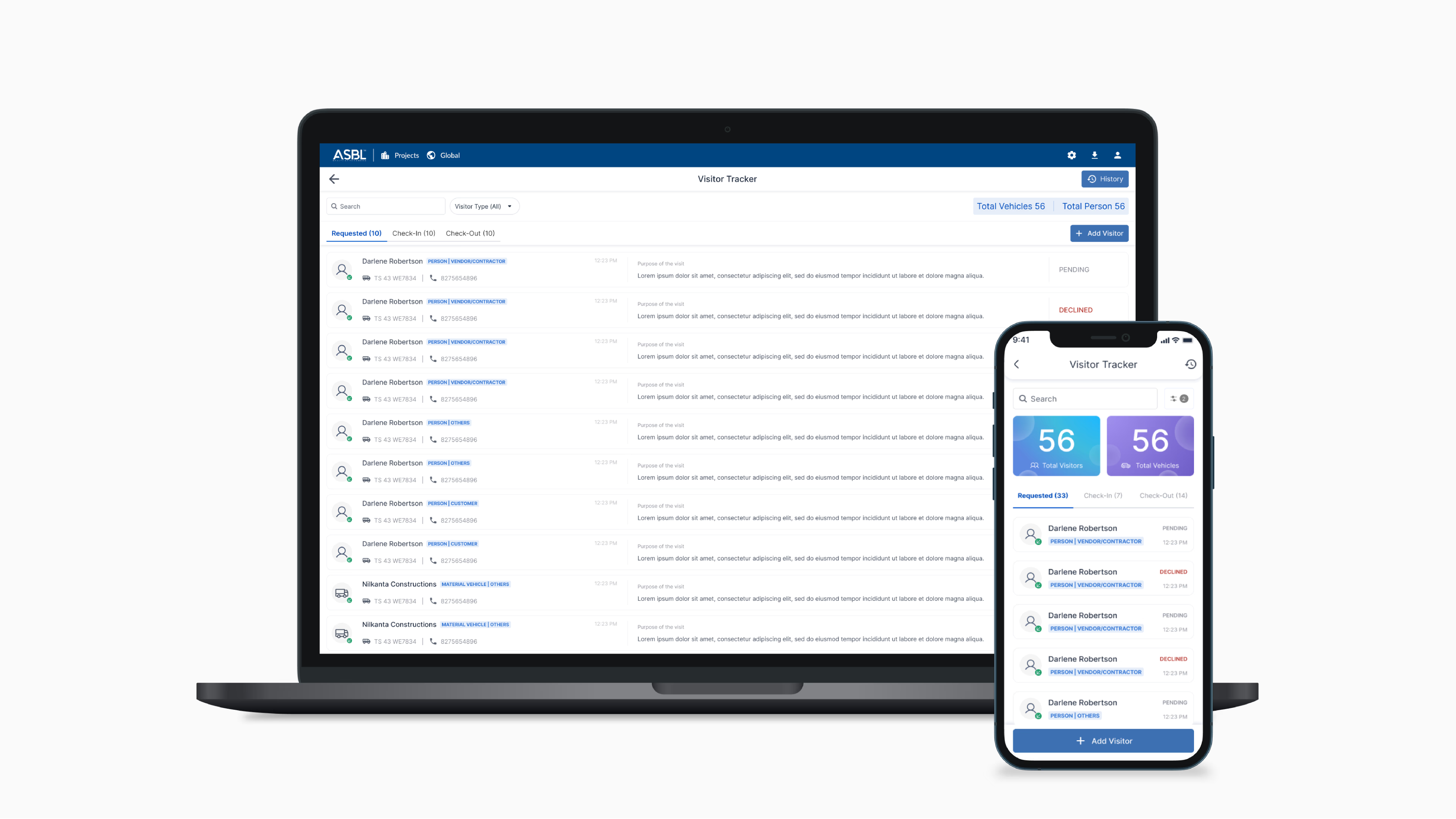
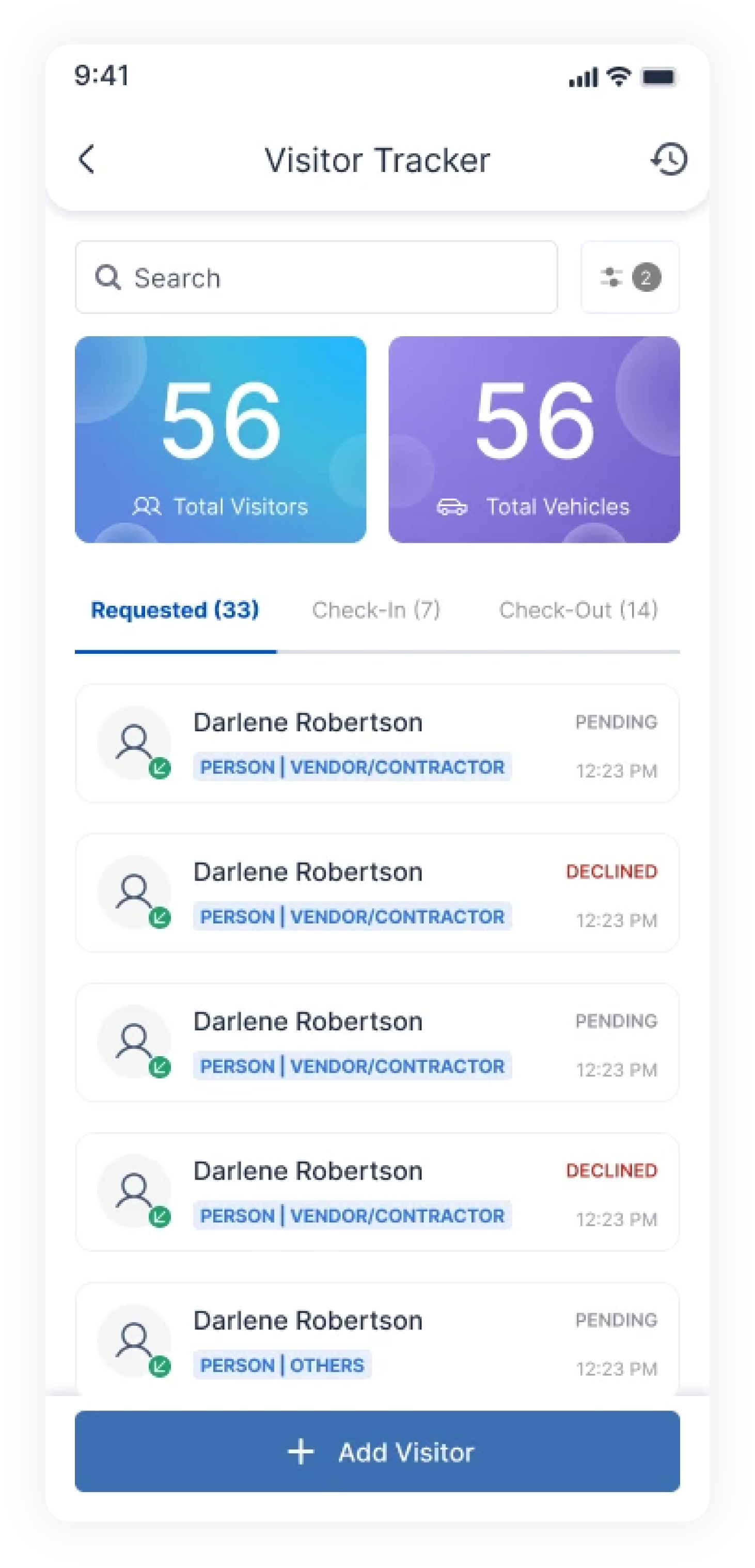
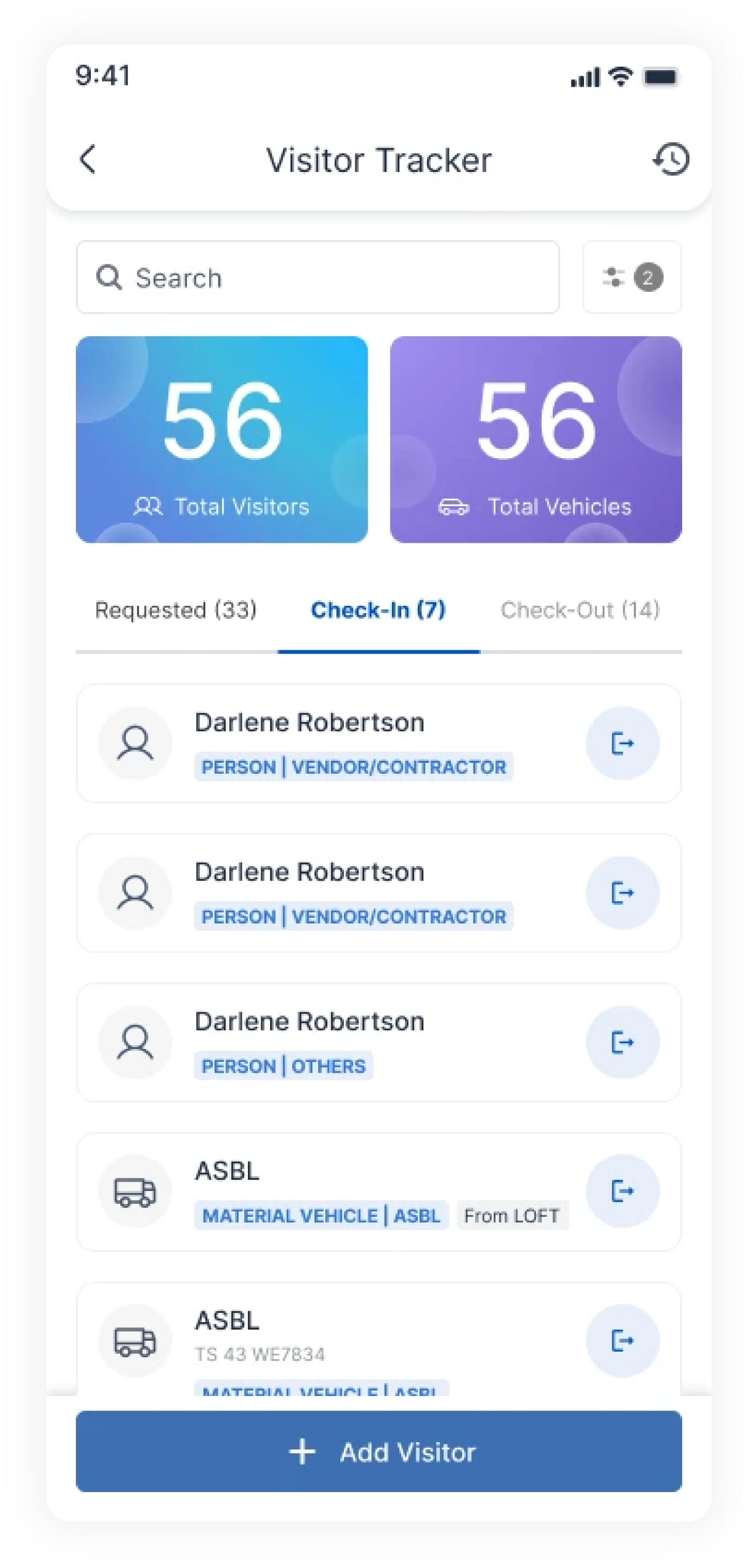
The first screen security opens every morning replacing the call log. A live view of all today’s movements across tabs: Requested, Check-In, Check-Out.
Live count of total visitors and vehicles on site
Tabs for Requested, Checked In, Checked Out
Filter by visitor type, search by name or vehicle number
Security sees updated status instantly, no call needed
Known employees shouldn’t create a queue at the gate every day. Staff entries are auto-approved and traceable.
Selected from the central employee directory, no manual typing
Auto-approved based on project rules
Multiple staff added in a single action
Check-in and check-out are fast and logged automatically


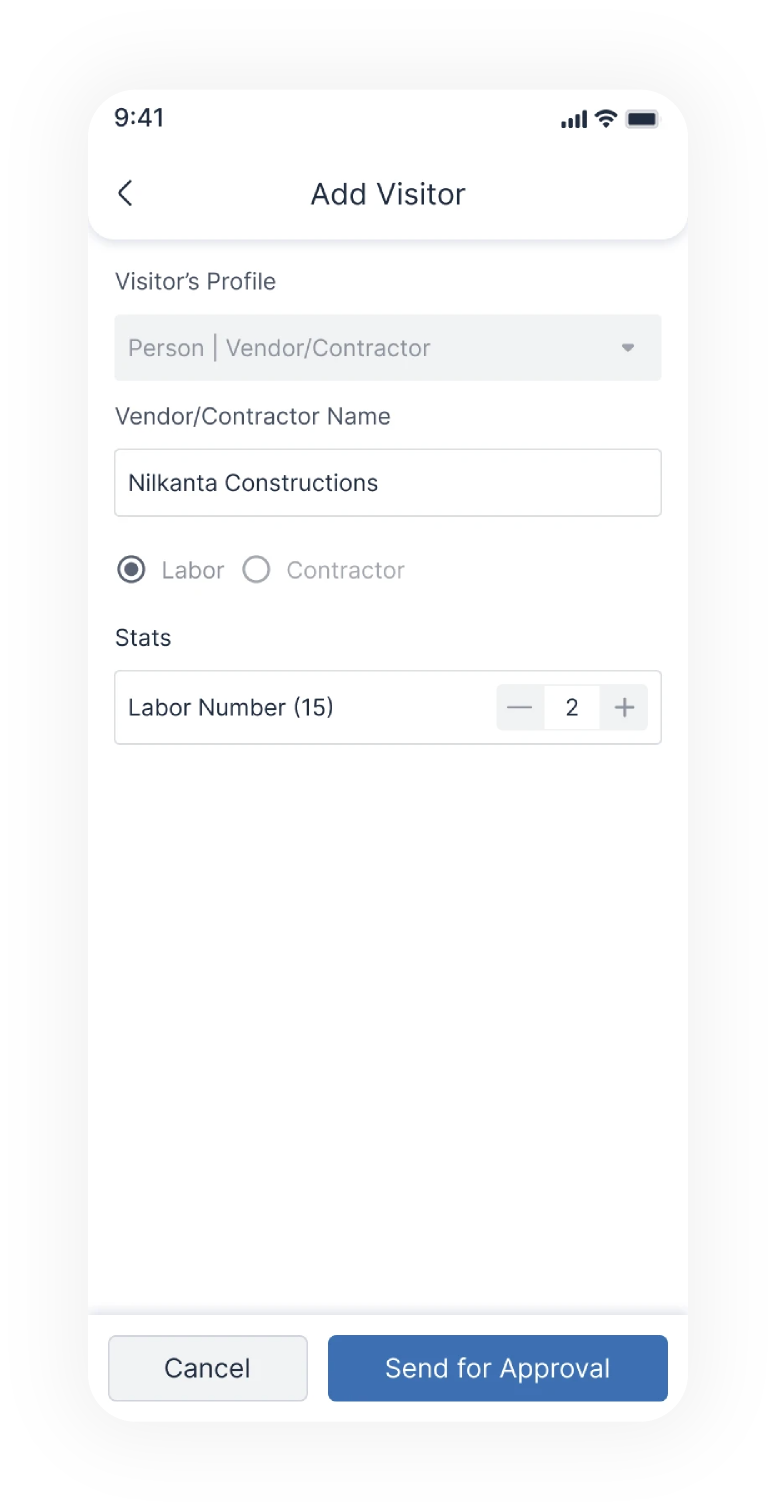
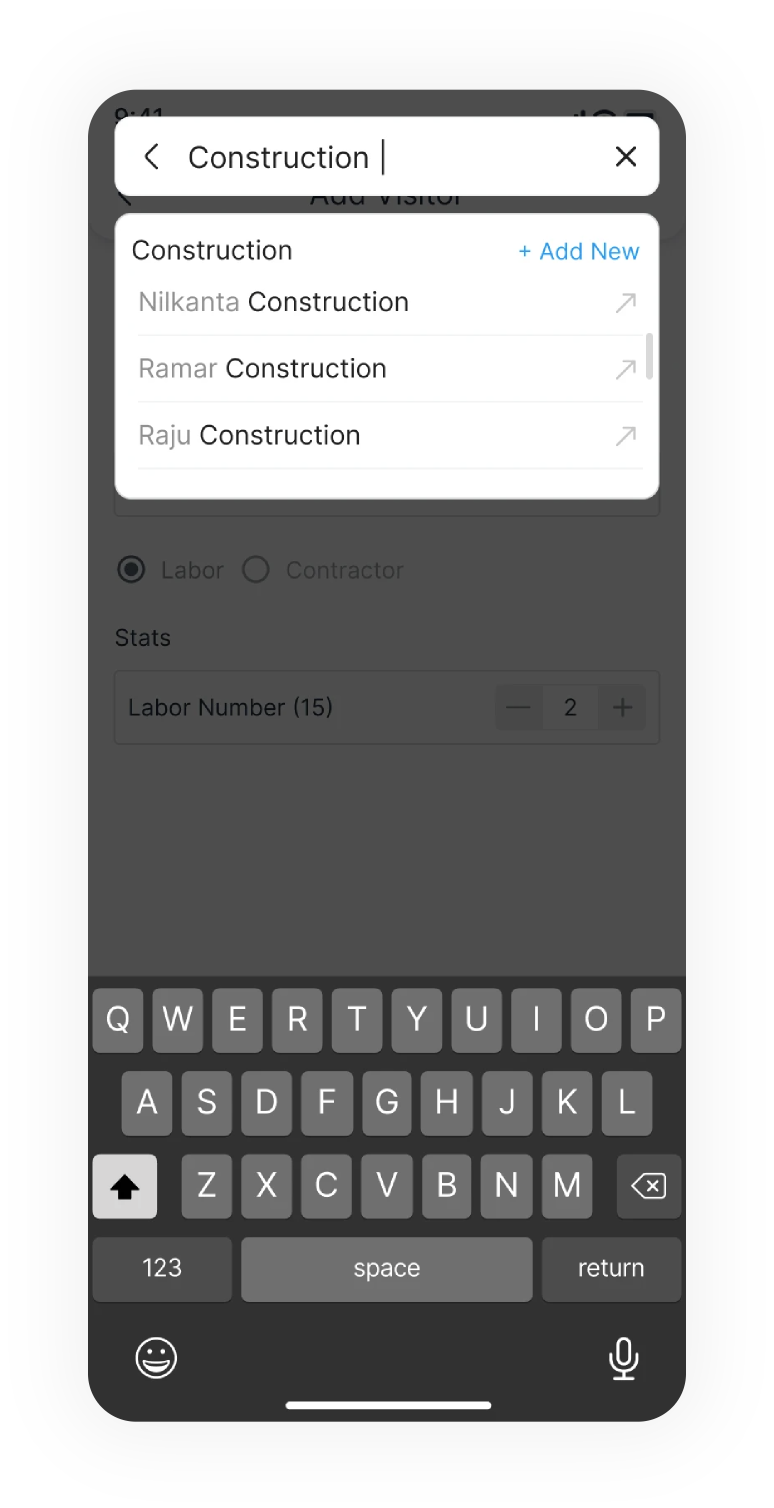
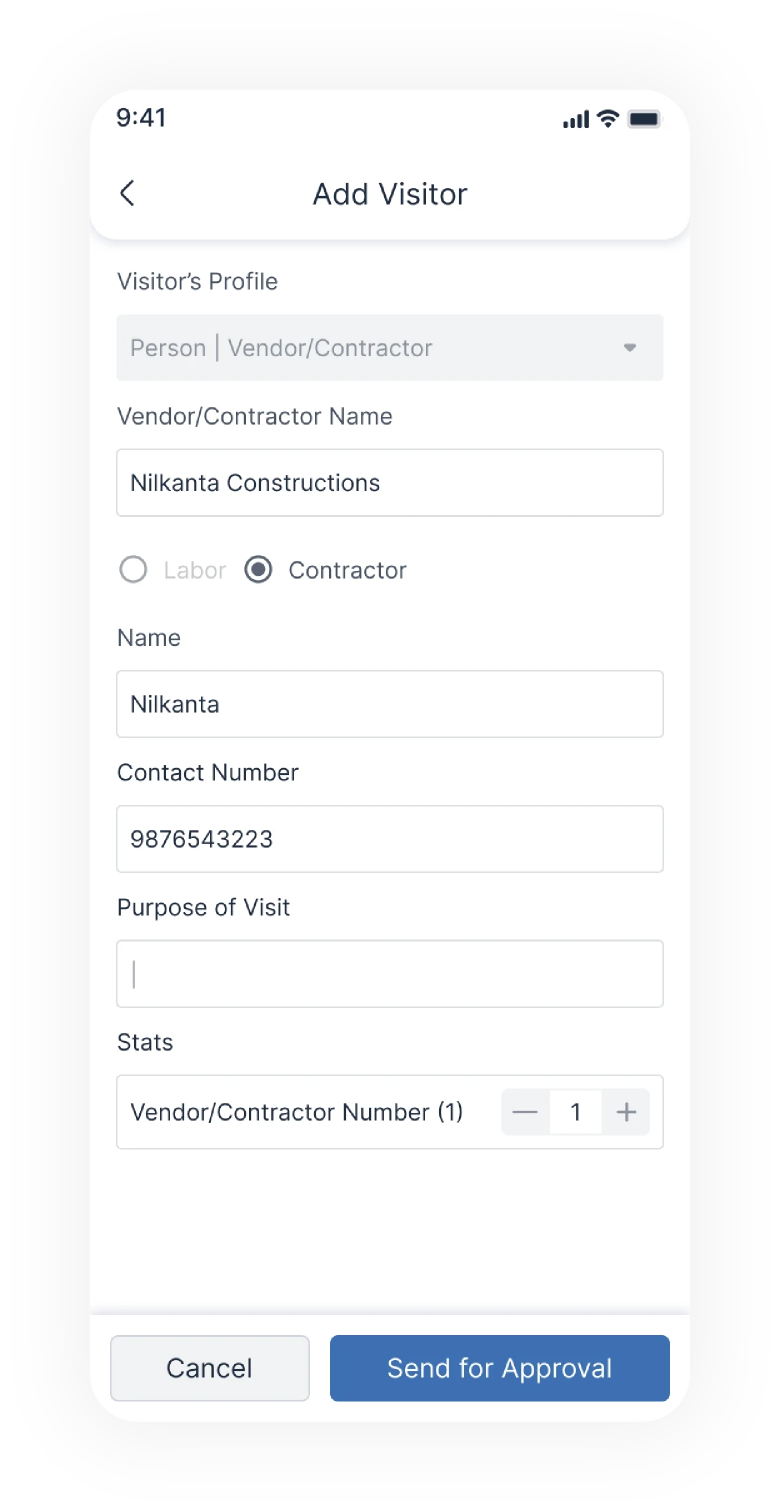
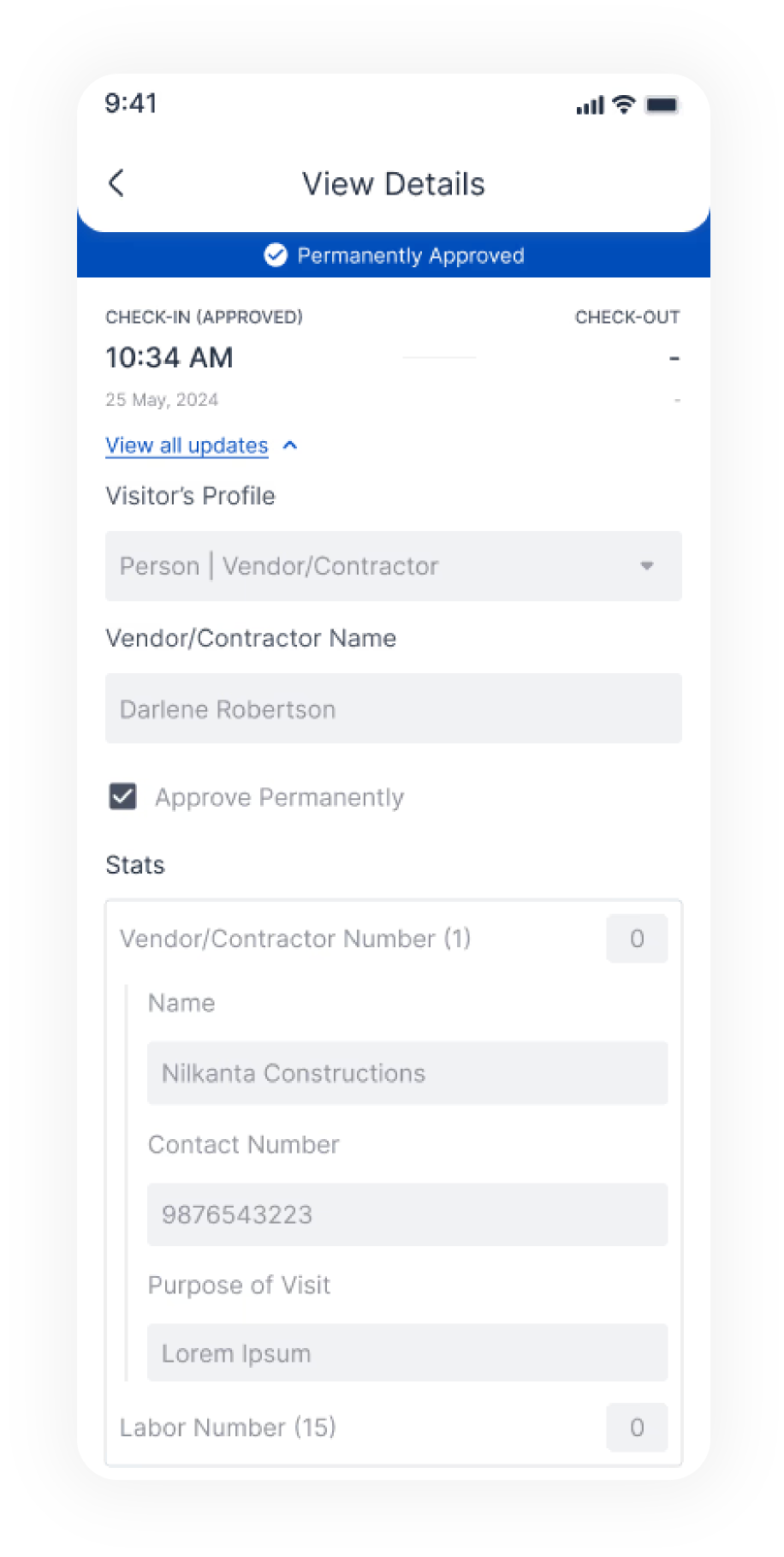
One clear question at the gate: “Does this contractor have approval, and how many people from them should be inside right now?”
Contractor selected from global contractor directory
Expected labour count entered upfront
System shows how many from same contractor are already inside
Day-level or permanent approvals for regular contractors
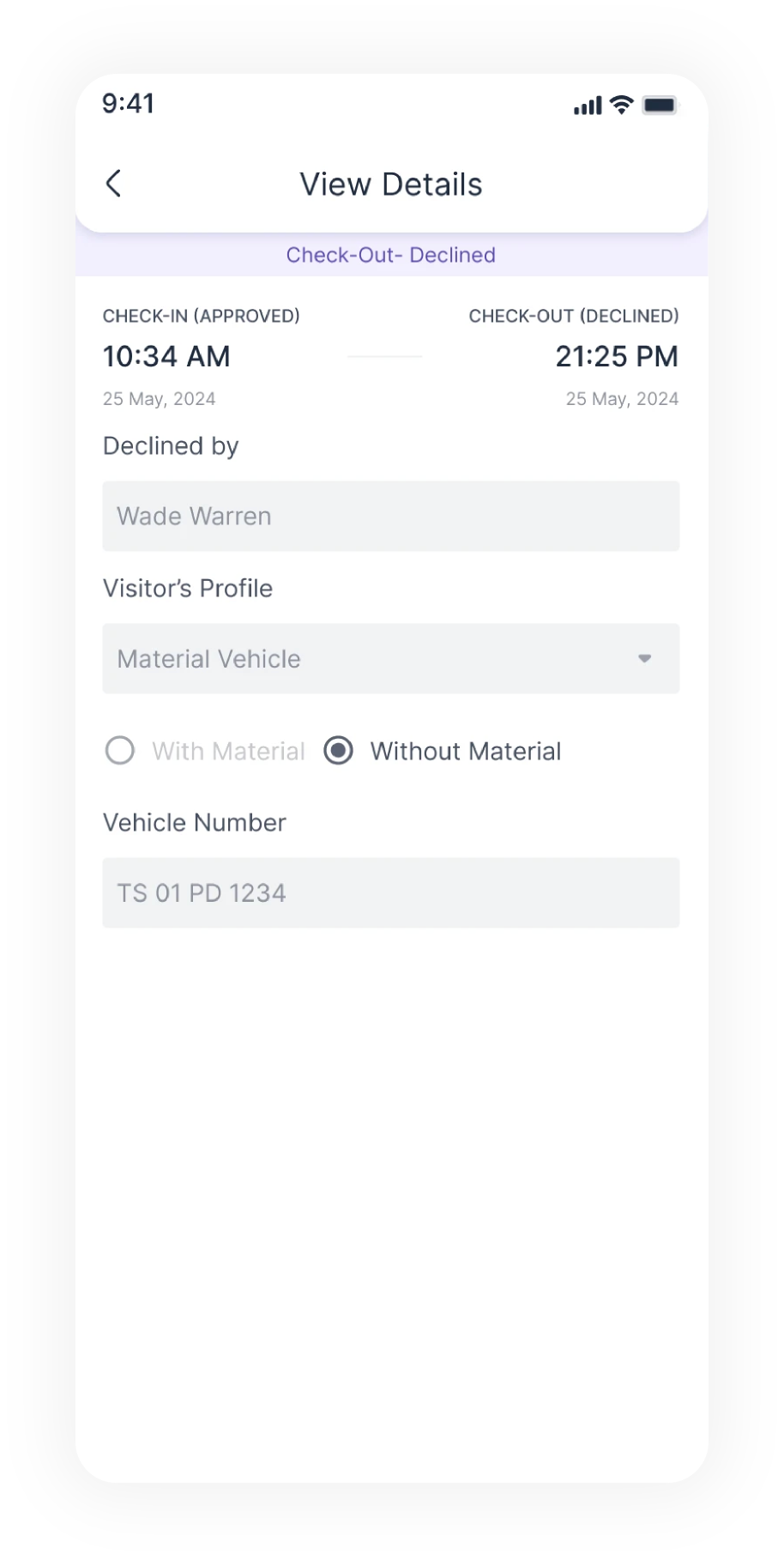
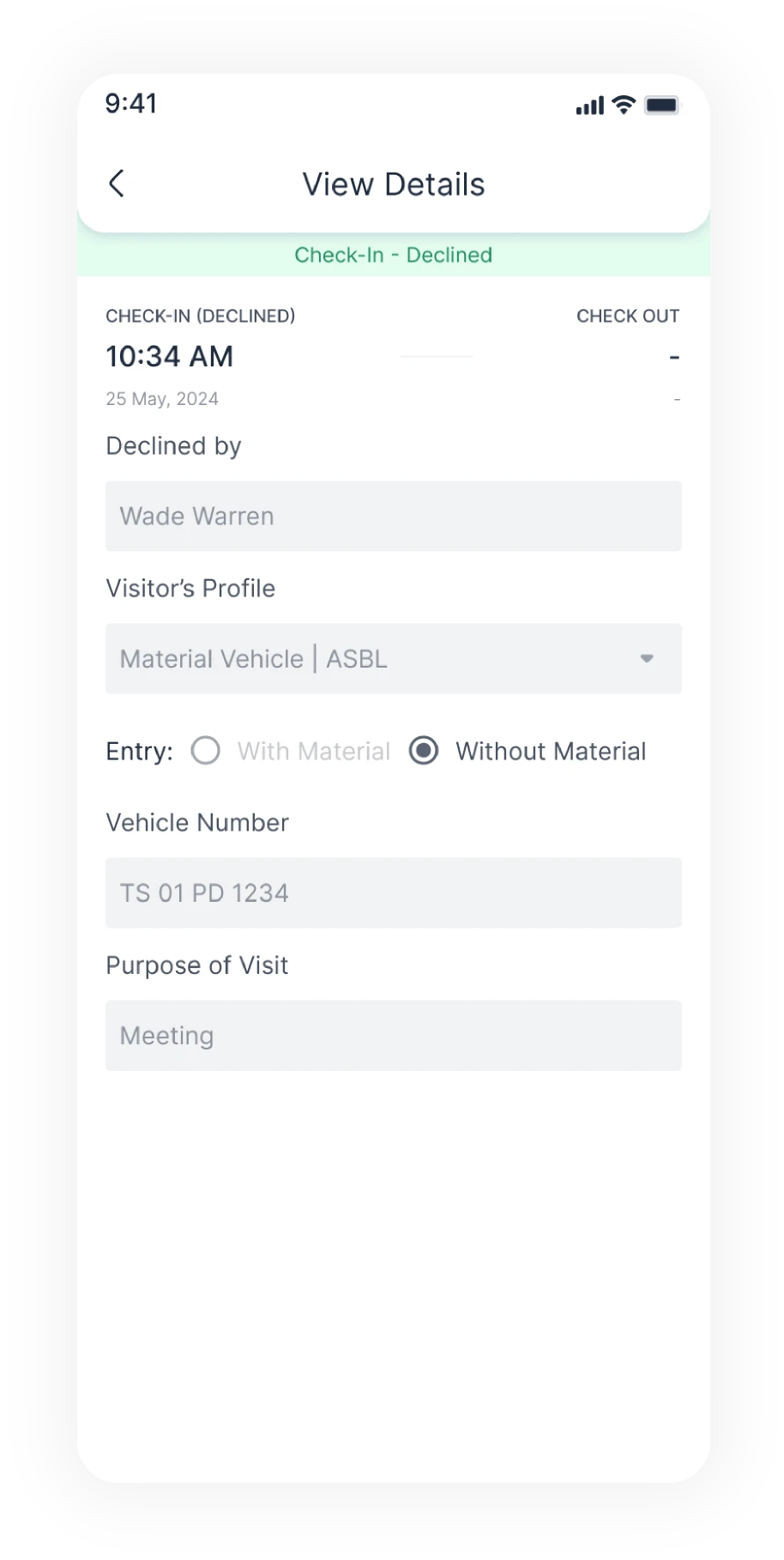
Declined state shows reason and who declined
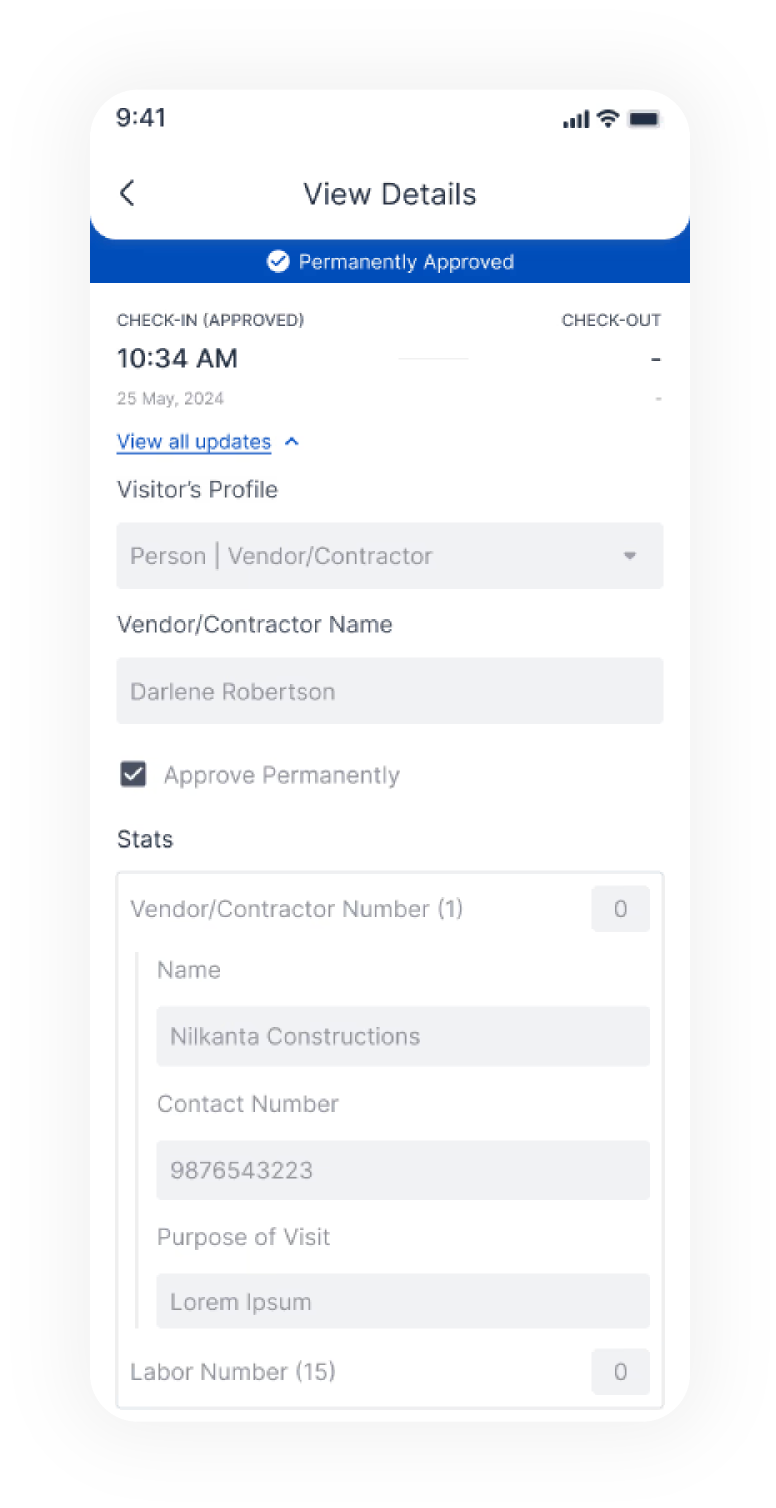
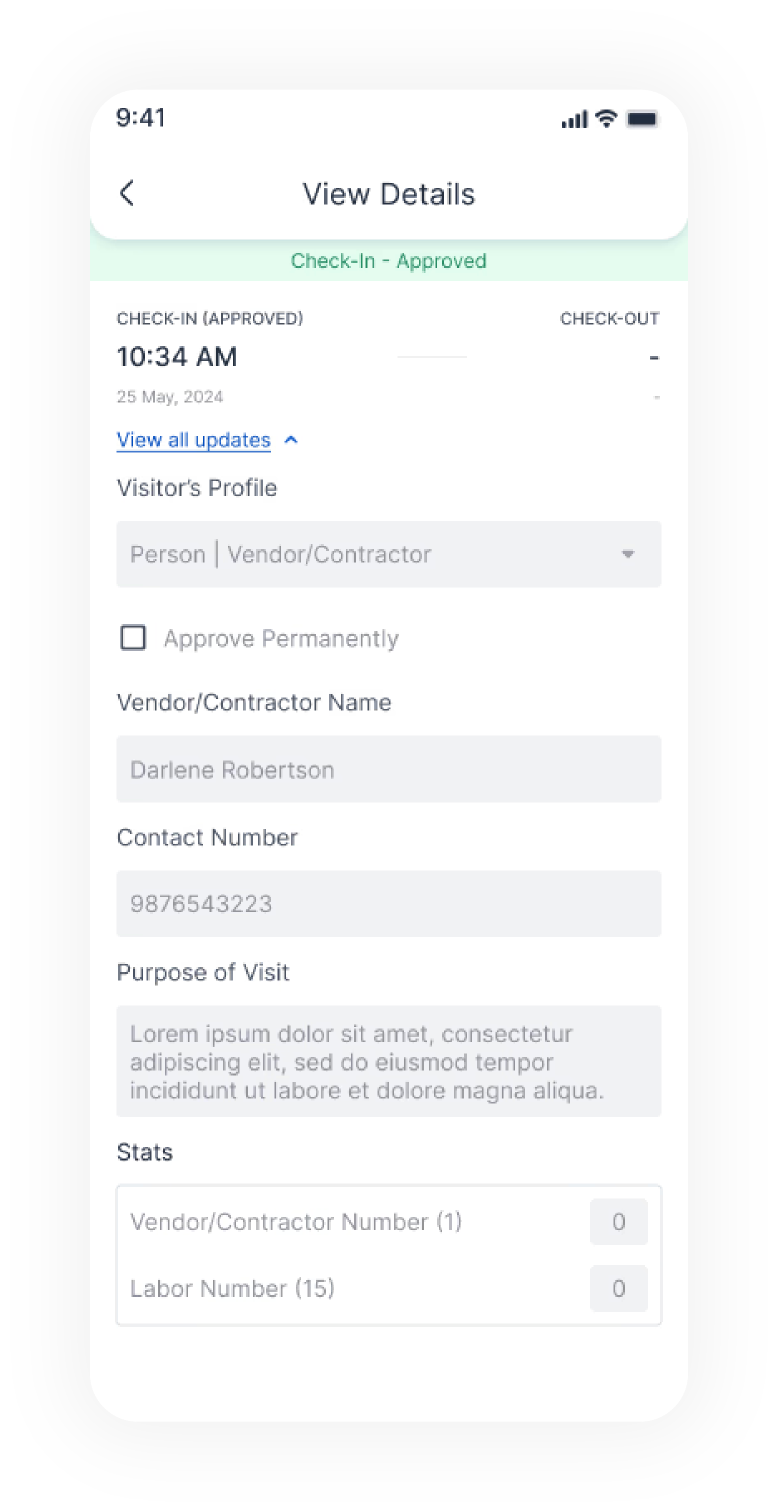
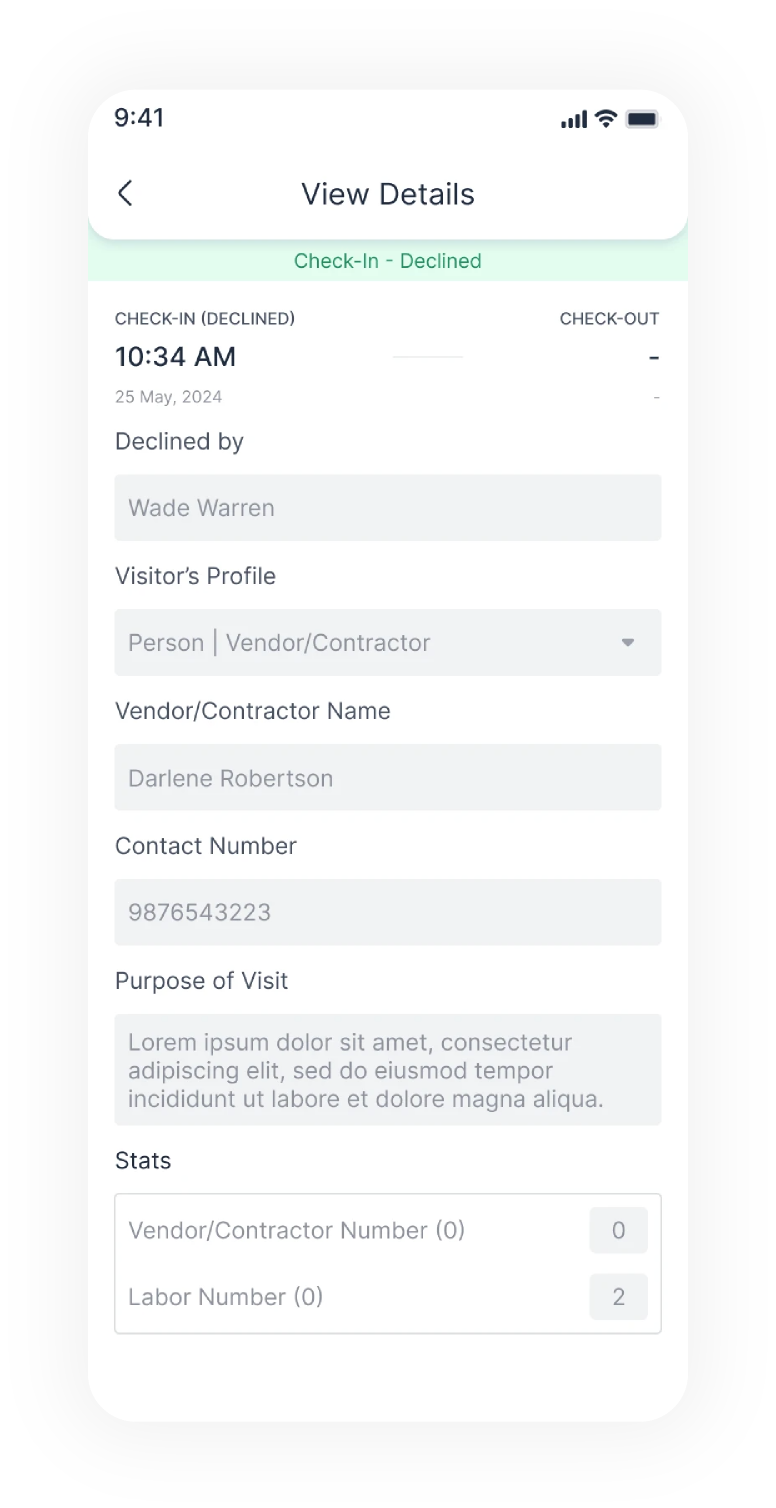
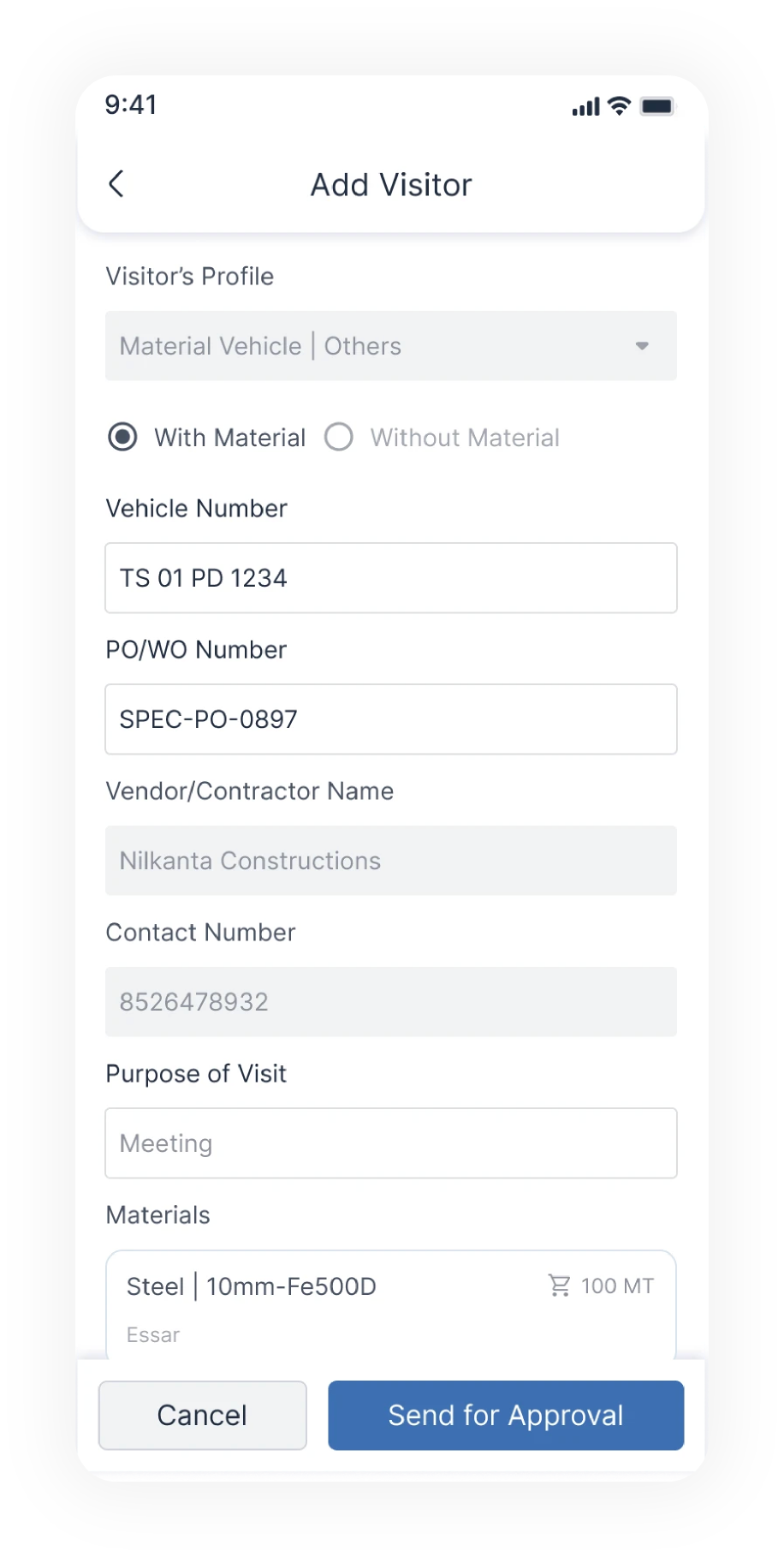
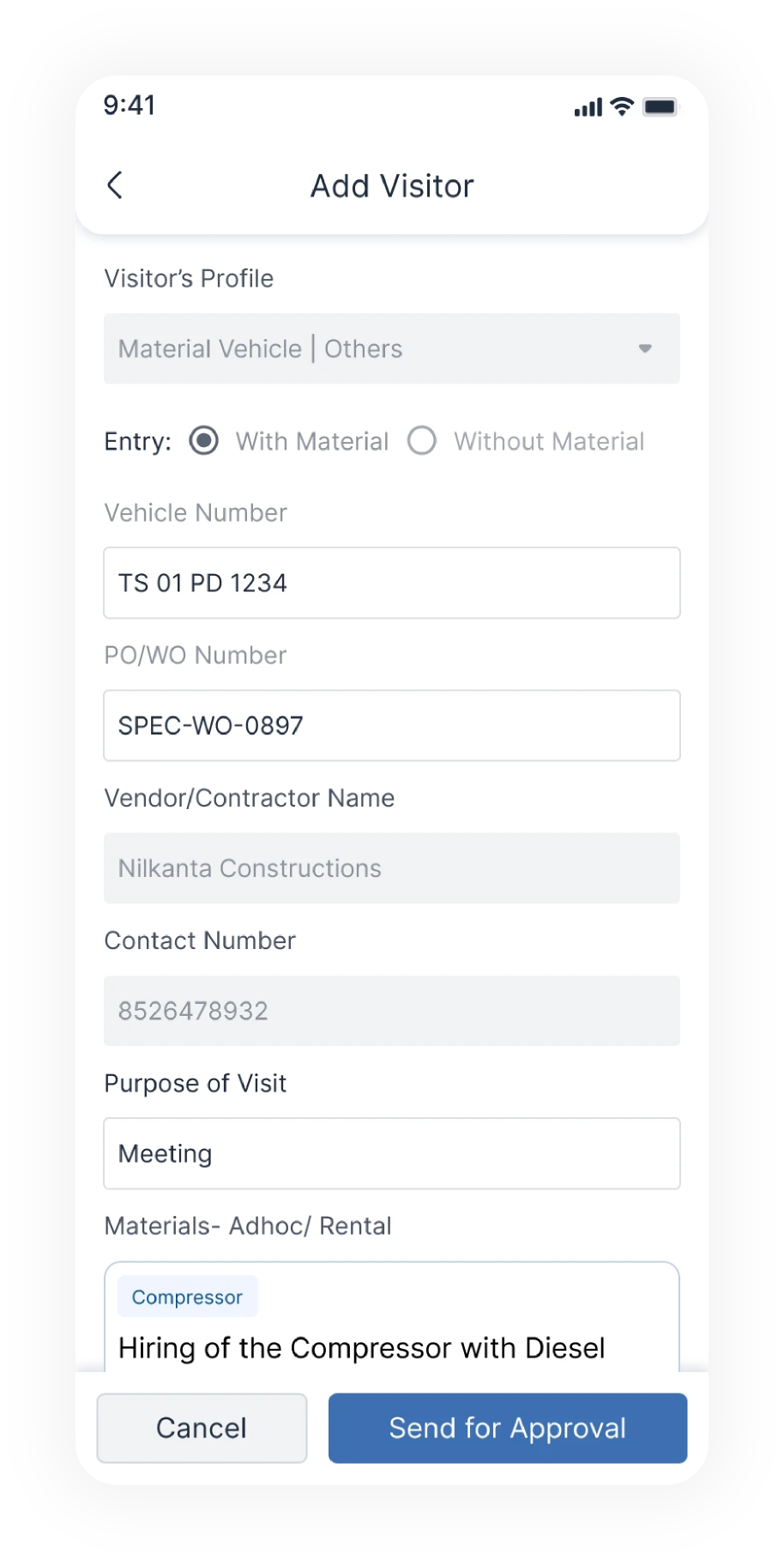
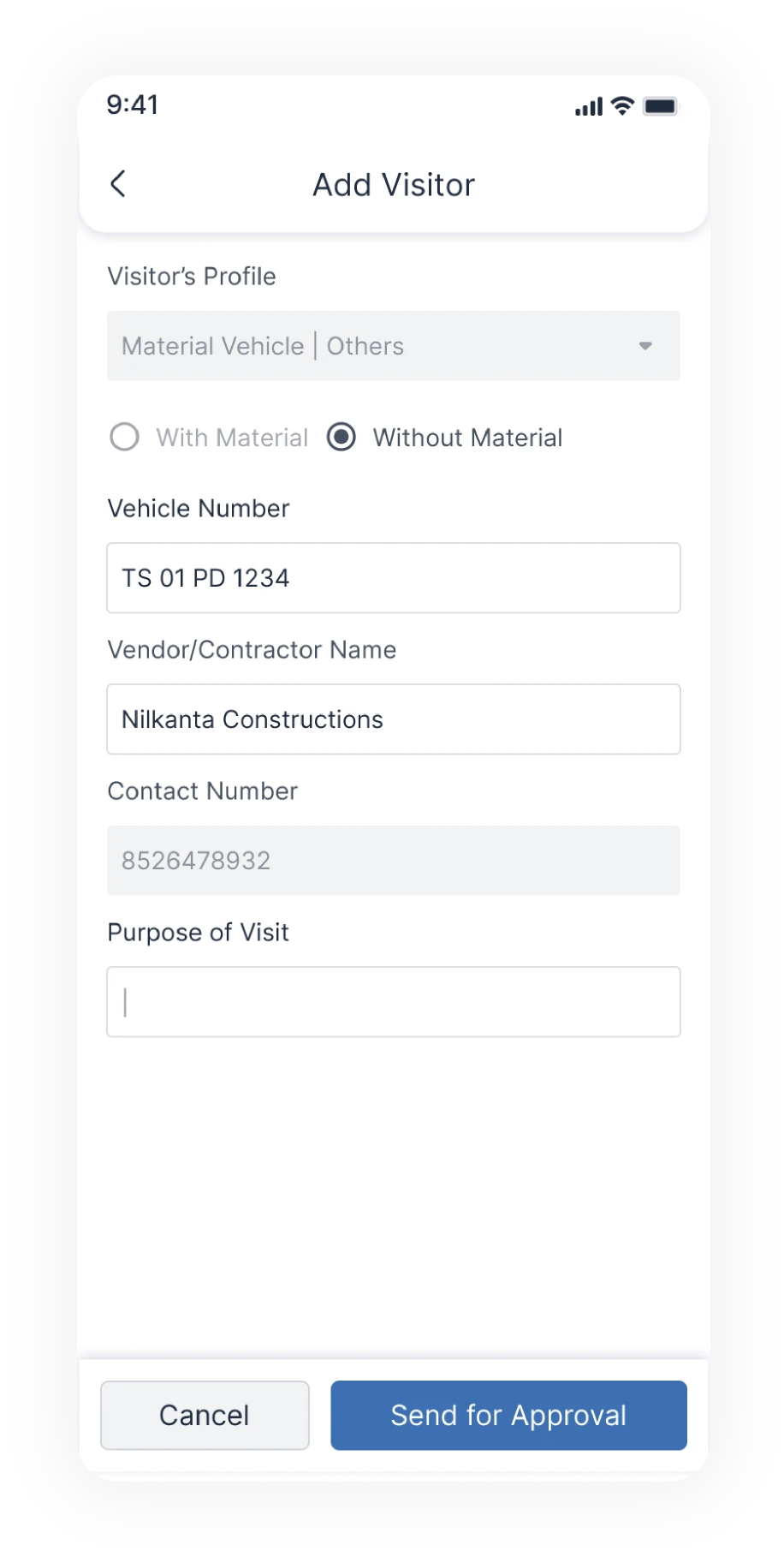
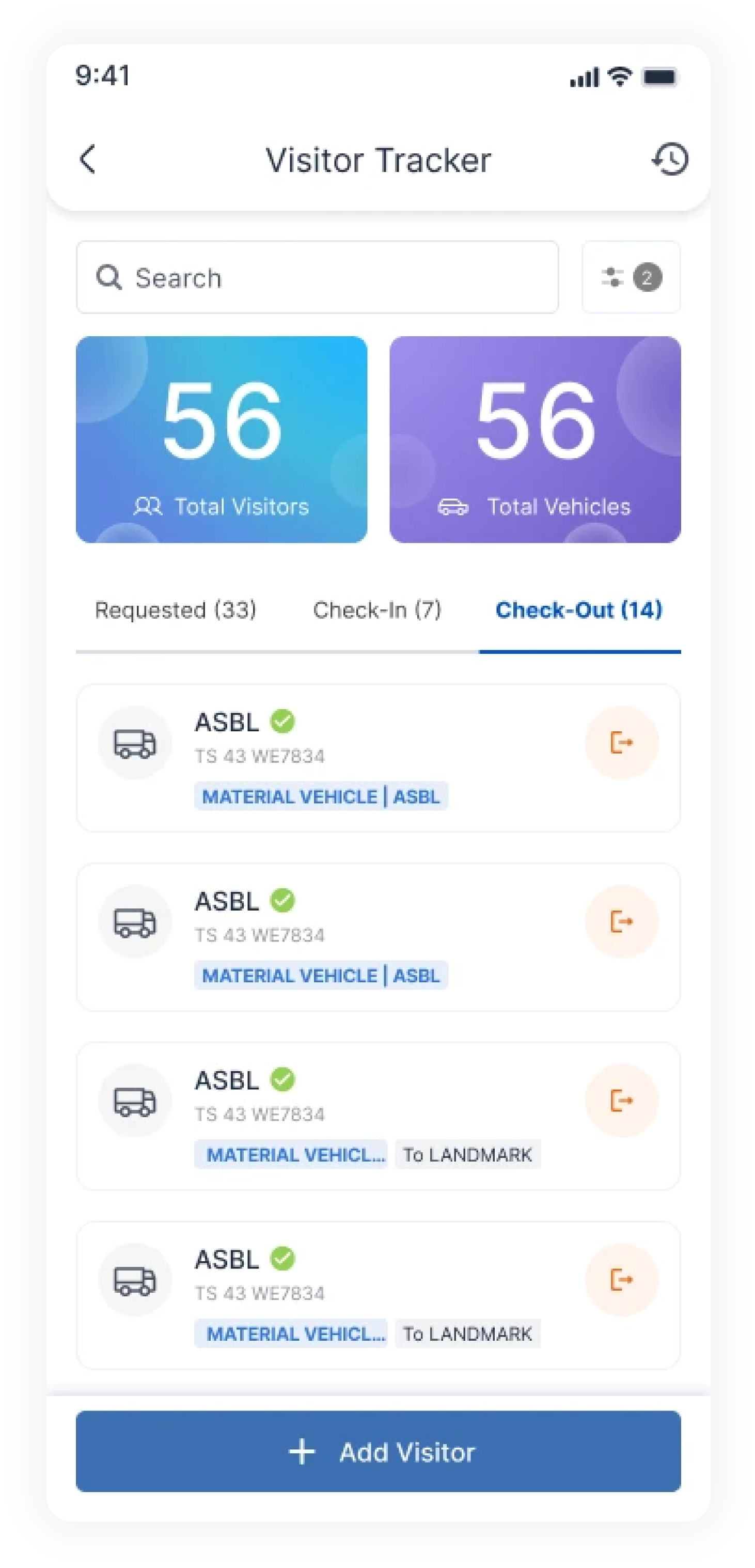
Material vehicles were the biggest bottleneck. The flow connects visitor entry to inventory reality, catching issues before the truck pulls through the gate.
Entry with material linked to PO/WO, or without material for other purposes
PO validation and MRN requirement surfaced at log time
Active vs inactive PO handled, no surprises at the gate
Edits and deletions blocked once material entry is logged
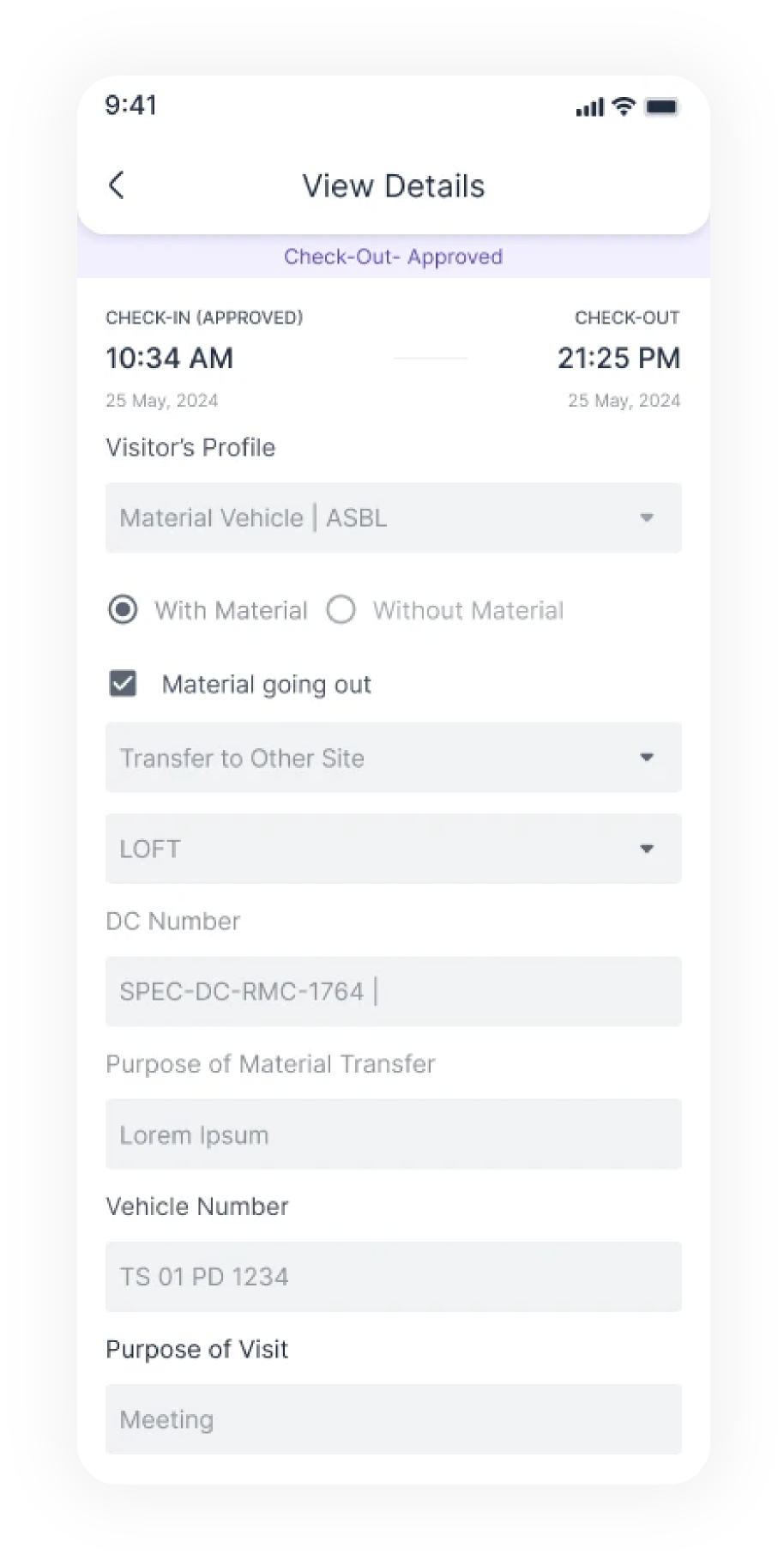
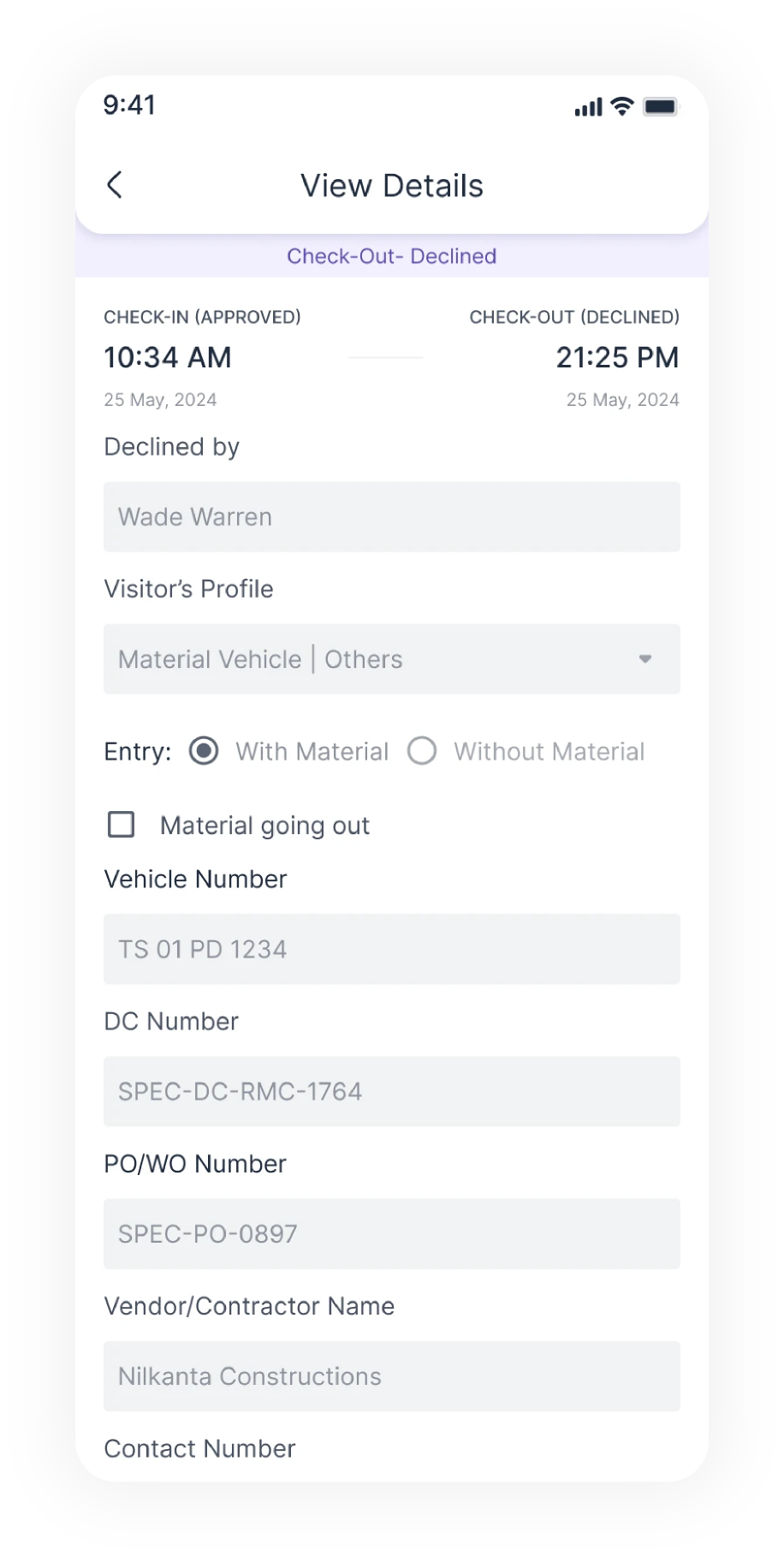
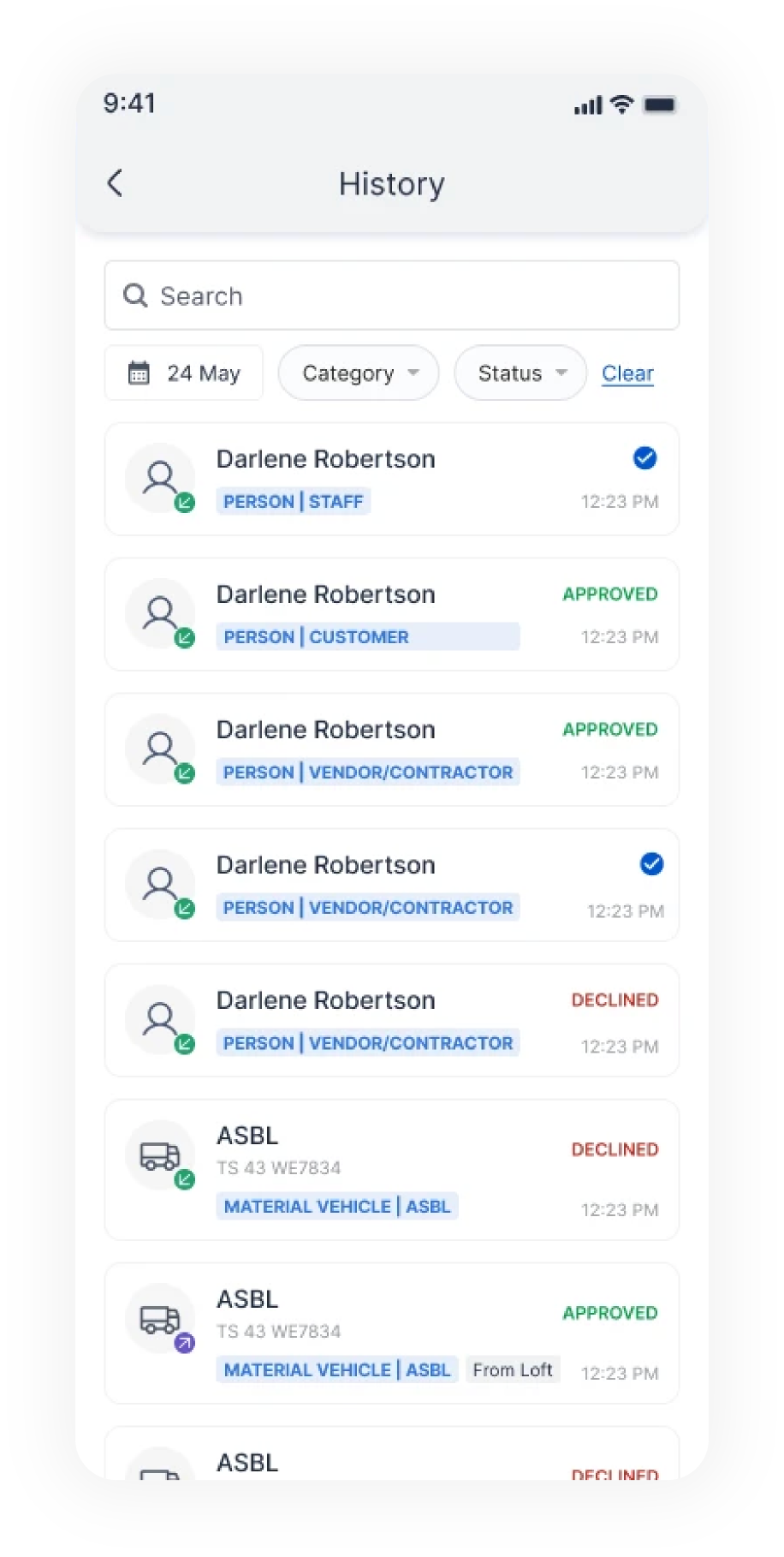
The history view answers questions nobody could answer before: “Who was on-site yesterday afternoon?” Every movement logged automatically, not manually.
Visitor type, contractor details, vehicle and PO/WO info
Timestamps for request, approval, check-in, and check-out
Status per entry: completed, pending, declined
Searchable and filterable by date, category, and status
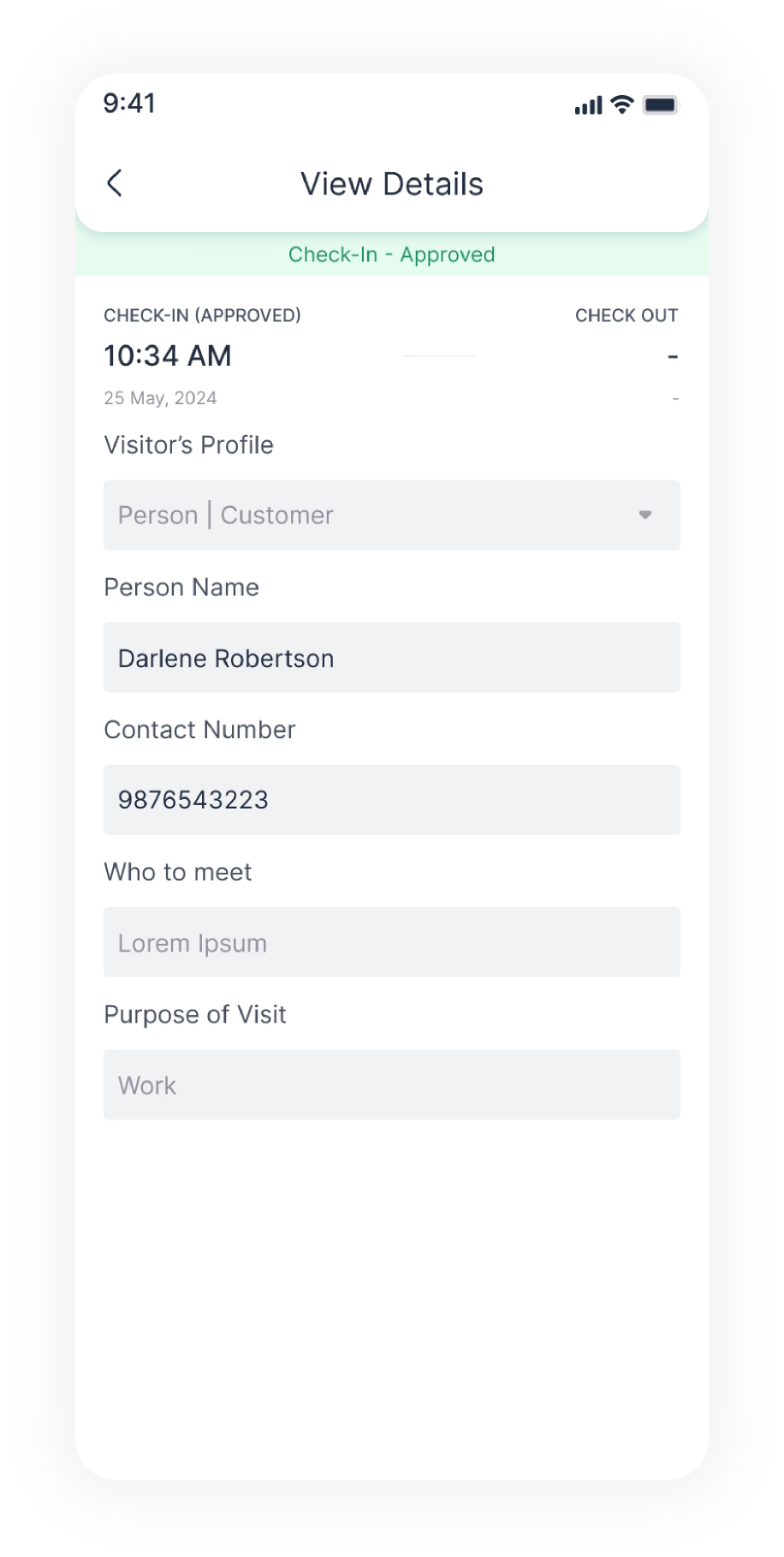
Admins get all context they need in the notification itself, visitor type, contractor, labour count, PO/WO and approve or decline directly from it.
Request notifications to admins when approval is needed
Approval/decline status pushed to security instantly
Check-in and check-out updates where relevant
Impact — Week 1 & 2 post-launch
Clear visibility. Faster approvals. Smoother movement across the gate.
Security starts their day in the Visitor Tracker not in the call log
Material trucks move predictably, PO/WO issues caught before arrival, not at the gate
Admins approve based on structured information, not vague requests
Daily visitor summaries pulled in seconds — the history is already there
Contractor labour counts are controlled, not approximate
.png) LinkedIn
LinkedIn
.png) Email
Email
.png) Behance
Behance